


Modern communications providers depend on SaaS platforms to keep the business moving. From billing and customer care to payments, reporting, service delivery, and operational workflows, cloud-based solutions have become foundational to delivering faster, smarter, and more connected customer experiences.
But as SaaS environments grow, so does the responsibility to protect them. Sensitive data, user identities, third-party integrations, and critical business processes now move across a broader, more connected ecosystem.
But as SaaS ecosystems become more connected, they also become more difficult to secure. Cyber threats are evolving rapidly. Identity-based attacks continue to rise, third-party risks are expanding, and AI is making phishing, impersonation, and social engineering attacks more convincing than ever before.
For providers, the stakes are high. A breach can disrupt operations, damage customer trust, create regulatory exposure, and leave a lasting reputational impact.
Following these eight best practices can help providers strengthen their SaaS security strategy and better protect what matters most.
Best Practice #1: Protect Using Layered Security
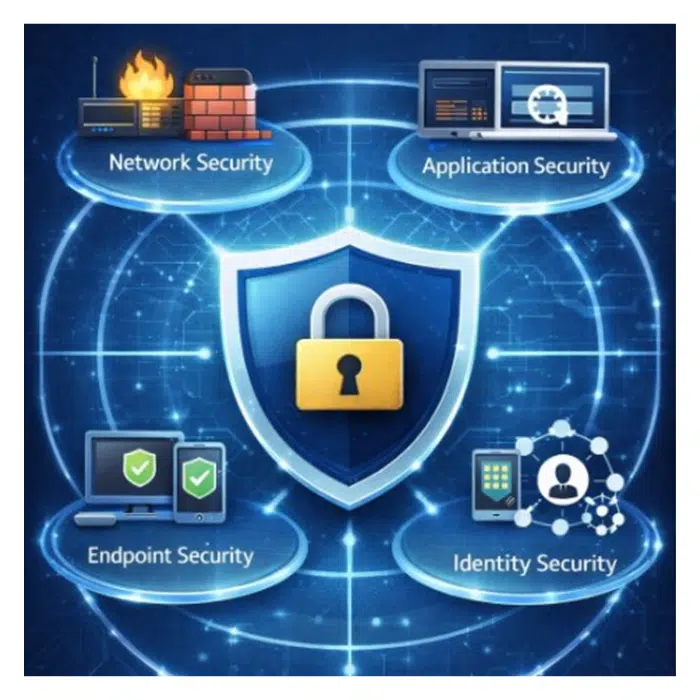
Strong security depends on multiple lines of defense working together to protect the business from every angle.
No single control can stop every threat. A strong SaaS security strategy uses layered protections across the network, application, endpoint, and identity layers to reduce single points of failure.
For communications providers, this approach is especially important because critical operations depend on many connected systems and workflows. Layered security helps limit the impact of a potential issue by creating multiple opportunities to detect, slow, or contain suspicious activity before it can disrupt the business.
Best Practice #2: Strengthen Identity & Access Management
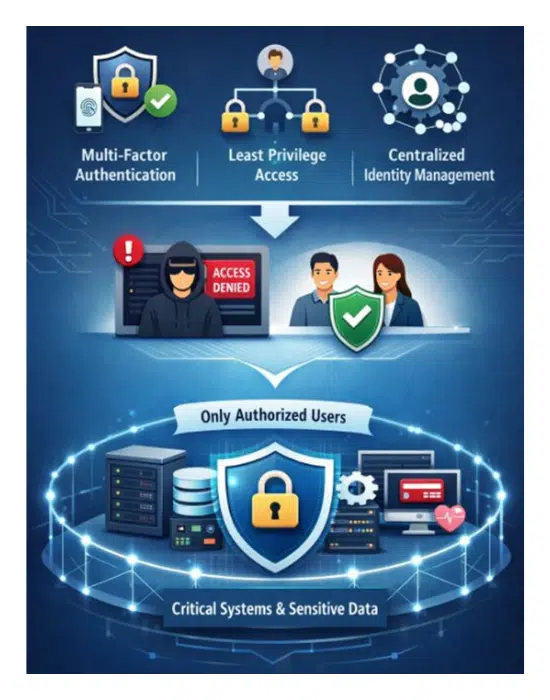
When identity is protected, the systems and data behind the business are better protected too.
Identity has become one of the most targeted attack surfaces in modern SaaS environments. When attackers compromise credentials or gain access through over-permissioned accounts, they can move quickly across systems.
Providers should enforce strong authentication, centralized identity controls, and least privilege access. Regular access reviews are also critical, especially when employees change roles, leave the organization, or no longer need certain permissions. SaaS partners should also support secure access models, including single sign-on, multi-factor authentication, and appropriate access controls.
Best Practice #3: Enhance Monitoring & Incident Response 
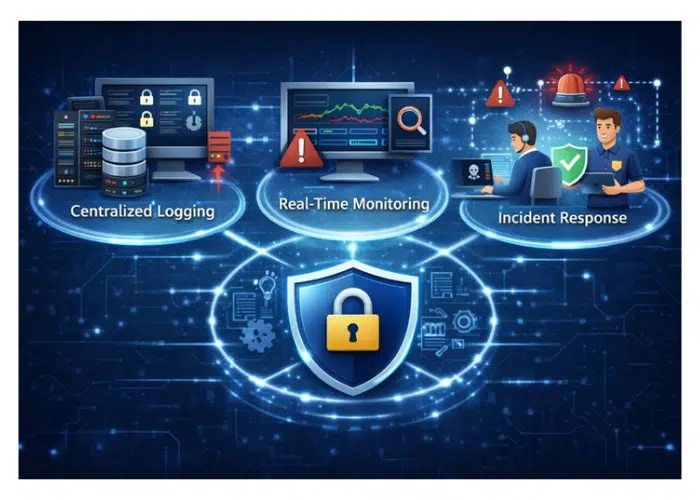
The faster a threat is identified, the faster teams can act to contain risk and protect continuity.
Security teams need visibility into what’s happening across the environment. Centralized logging, real-time monitoring, and a well-defined incident response program help organizations detect suspicious activity faster and respond with greater confidence.
When incidents occur, response time can directly influence operational disruption, customer impact, and financial exposure. Providers need the ability to recognize unusual behavior, contain potential threats, preserve business operations, and communicate clearly with the right stakeholders. An effective incident response program should be documented, tested, and updated as the business and threat landscape evolve.
Best Practice #4: Make Data Protection A Priority
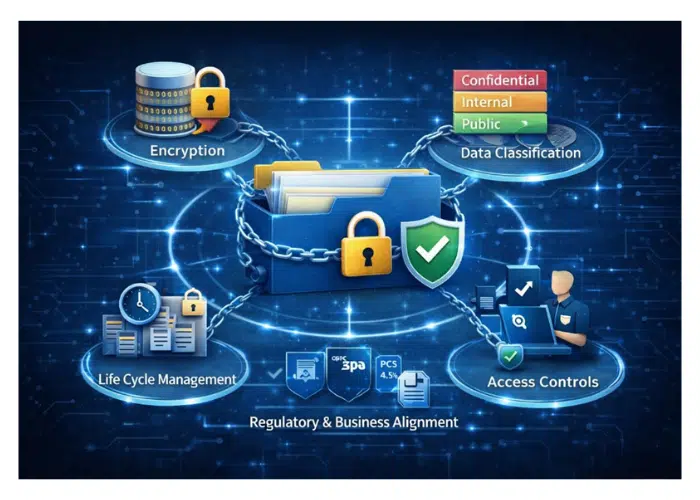
Protecting data starts with understanding where it lives, how it moves, and who has access to it.
Data is one of the most valuable assets a provider manages. It’s also one of the most targeted.
A strong data protection strategy includes encryption, classification, lifecycle management, governance, and access controls aligned with business and regulatory requirements. Not all data carries the same level of risk, which is why providers need clear processes for identifying sensitive information and applying the right level of protection based on its value, sensitivity, and potential impact if exposed.
Best Practice #5: Secure The Software Lifecycle

Security is strongest when it’s built into the way software is designed, developed, tested, and maintained.
SaaS security also depends on how software is created and delivered. Security should be integrated into the software development lifecycle, supported by secure development practices, vulnerability scanning, patching, code review, testing, and remediation processes.
Providers evaluating SaaS vendors should look closely at how security is embedded into the development lifecycle. Ask how vulnerabilities are identified, how often testing occurs, how quickly issues are remediated, and how security improvements are continuously maintained over time. The goal is to reduce risk before issues reach production and ensure security remains part of ongoing platform improvement.
 Best Practice #6: Manage Third-Party & Supply Chain Risks

Every vendor, partner, and integration connected to the business can influence its overall security posture.
Modern SaaS environments are highly connected. Vendors, partners, integrations, APIs, and third-party applications all play a role in how data and processes move through the business.
That connectivity can create efficiency, flexibility, and scale, but it also requires strong oversight. Providers should assess and continuously monitor critical vendors and partners to understand how they protect data, manage access, respond to incidents, and maintain compliance. Compliance reports and certifications can help validate whether a partner’s security program aligns with the provider’s expectations.
Related Article: Unraveling The Tangled Web – Supply Chain Risk Management For Service Providers
Best Practice #7: Govern AI & Emerging Risks

As new technologies create new opportunities, they also require clear guardrails to reduce exposure and protect sensitive information.
AI is rapidly reshaping both cybersecurity operations and cyber risk. It can help organizations improve productivity and strengthen operations, but it can also increase risk when sensitive data is copied into unmanaged tools or when attackers use AI to scale phishing, impersonation, and social engineering.
Providers should establish clear policies around AI usage, data exposure, tool access, and responsible adoption. Employees need to understand what information can and can’t be shared with AI tools, and organizations should evaluate how vendors are managing AI-related risks within their own platforms and operations.
 Best Practice #8: Elevate Workforce Security Awareness

A security-first culture turns employees into an active part of the organization’s defense.
Technology plays a critical role, but people remain one of the most important lines of defense in any security program.
A strong security culture helps employees recognize threats, report suspicious activity, and make better decisions in their day-to-day work. Regular training should cover phishing, credential protection, social engineering, data handling, AI usage, and incident reporting. To remain effective, security awareness should be ongoing, practical, and relevant to the real risks employees may encounter.
Building Trust Through Proven Security Practices
At IDI Billing Solutions, security is foundational to how we support our customers, protect sensitive information, and maintain trust across every interaction.
Our security program is guided by a clear mission: continuously assess, strengthen, and evolve our security posture to help safeguard customer data, business operations, and the broader ecosystem connected to our platform.
IDI’s security framework is aligned to the NIST Cybersecurity Framework, helping guide how we govern, identify, protect, detect, respond to, and recover from evolving security risks. This approach supports a disciplined, proactive security strategy spanning our people, processes, technology, and partnerships.
That commitment is reinforced through compliance with recognized industry standards, including SOC 1, SOC 2, PCI, and HIPAA. Together, these standards help provide assurance across critical areas such as operational security, data protection, financial controls, processing integrity, availability, confidentiality, privacy, and safeguards for protected health information.
For communications providers, security is about more than compliance checkboxes. It’s about operational resilience, responsible stewardship of customer data, transparent partnerships, and maintaining confidence in the systems that power the business every day.
Want to learn more about how IDI approaches security, compliance, and risk management?
Visit our Trust Center to explore our security posture, certifications, and commitment to building a more secure experience – or contact our team at 800.208.6151 or request a meeting here.