


As 5G technology continues to reshape the telecommunications landscape, service providers are presented with significant opportunities to monetize their networks beyond consumer markets. Enterprises across diverse industries are eagerly embracing 5G’s transformative capabilities to drive innovation, enhance efficiency, and gain a competitive edge.. For telecom companies, this shift presents a lucrative pathway to significant revenue growth.
In this fourth installment of our “Monetizing 5G” blog series, we explore four essential strategies for telecom providers to effectively charge enterprises for 5G products and services. If you haven’t yet, be sure to check out our previous blogs in this series, where we discuss charging, leveraging network APIs, and maximizing returns through IoT connections.
With IDI Billing Solutions’ flexible and agile Billing and Operations Support System (B/OSS), you’re empowered to capitalize on these opportunities—no matter how you choose to monetize 5G.
The Enterprise Opportunity in 5G
Enterprises represent a diverse and high-value customer base. Unlike consumer markets, where pricing models are more straightforward, enterprises have complex needs that require customized solutions. As the manufacturing, healthcare, logistics, and utilities industries increasingly adopt 5G, service providers have the opportunity to offer differentiated services that command premium pricing. The challenge lies in developing charging strategies that align with enterprise needs while maximizing revenue potential.
Strategy #1 – The Next Generation: 5G as an Upgrade for Workforce Mobility 
One of the most straightforward ways to monetize 5G in the enterprise space is by positioning it as an essential upgrade for workforce mobility. With remote and hybrid work models becoming permanent fixtures, the demand for reliable, high-speed connectivity for enhanced video conferencing, seamless collaboration, and ultra-fast data transfer across mobile devices will only grow.
Service providers can offer enterprise-specific mobile plans that prioritize high-performance 5G connectivity, especially for businesses with many remote or mobile employees. Additionally, 5G fixed wireless access (FWA) offers a compelling alternative to traditional broadband, providing enterprises with a reliable and flexible solution for remote office setups. Telcos can market these solutions as essential for modern workforce mobility, capturing new revenue streams from enterprises looking to empower their employees with cutting-edge connectivity.
Strategy #2 – Private Wireless Networks: Driving Business Competitiveness
In asset-intensive industries such as mining, manufacturing, ports, and utilities, enterprises are increasingly seeking ways to gain a competitive edge through automation and AI-driven decision-making. However, these industries often operate in environments where traditional wireless networks struggle to deliver the required performance.
Unlike public 5G networks, private networks provide dedicated, high-performance connectivity with ultra-low latency, making them ideal for environments with heavy machinery, expansive areas, or numerous connected devices. These private networks enable critical Industry 4.0 applications, like automated guided vehicles in factories or remote-controlled machinery in mining sites. Telcos can position themselves as key enablers of industrial transformation, charging a premium for the guaranteed performance and reliability these enterprises demand.
Strategy #3 – Network Slicing: Customizing Connectivity 
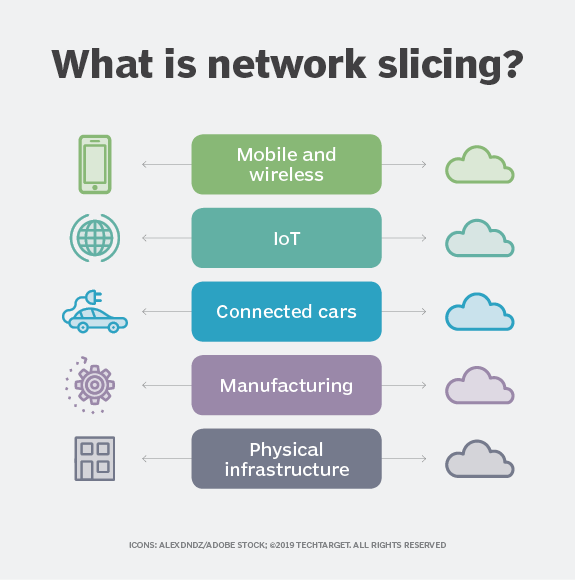
A more advanced monetization opportunity lies in network slicing, where service providers can virtually partition—or ‘slice’—their infrastructure into multiple logical networks, each with unique bandwidth, latency, and other attributes tailored to the needs of specific industries or business applications.
This technology is particularly valuable in sectors like healthcare, where ultra-low latency and high reliability are critical for applications like remote surgery or real-time patient monitoring. In the entertainment industry, slices can be optimized for high-bandwidth, low-latency applications like live streaming or VR, ensuringseamless, high-quality content delivery, even during peak demand times.
Automation is the key to success in this domain, enabling network operators to dynamically design, activate, optimize, and terminate slices in real-time, at scale, and at competitive prices. They can also offer self-service portals where customers can select the exact service attributes they want, for the duration they want, on demand.
Strategy #4 – Comprehensive 5G Solutions: Collaborative Partner Ecosystems
While network slicing leverages telecom companies’ core strengths in network management, the most lucrative opportunities will come from ecosystem-based innovation. This approach involves not just selling 5G connectivity but providing entire solutions that capitalize on the network’s unique capabilities, often in collaboration with other technology providers.
In the logistics sector, 5G’s high-speed connectivity enables real-time tracking and management of supply chains. For instance, 5G-powered sensors can be placed on shipments to monitor location, temperature, and humidity in real-time. The true value, however, comes from integrating AI to analyze this data, predicting potential delays or issues before they occur and automatically rerouting shipments to optimize delivery times. By partnering with AI and IoT providers, telcos can offer comprehensive solutions that provide seamless connectivity and deliver actionable insights to enhance supply chain efficiency and reliability.
The success of ecosystem-based innovation depends on the organization’s ability to build robust partnerships and create solutions that are easy for enterprises to access, consume, and integrate into their existing operations. By positioning themselves as integral players in the digital transformation of industries, telcos can secure significant new revenue streams while helping enterprises achieve their business goals.
The Key To 5G Monetization: Flexibility in Rating and Billing
The enterprises that will thrive in the 5G era are those willing to invest in the technology and partnerships necessary to turn 5G into a powerful driver of growth and innovation. For telecom service providers, the key to success lies in staying ahead of the curve, proactively developing solutions that will define the future of enterprise connectivity—and having the tools to properly monetize them.
Designed to support innovative product and service offerings, complex rating schemes, and diverse business models, IDI’s comprehensive B/OSS solution delivers the freedom and flexibility to support a wide range of business activities across all types of customers, markets, or service lines. Our solution integrates effortlessly with your existing systems, ensuring a smooth flow of customer and usage information, as well as billing and taxation records. This seamless integration minimizes disruptions and enhances operational efficiency, allowing you to focus on delivering top-tier service to your customers.
Ready To Build a Better Experience? Talk To IDI Today.
At IDI Billing Solutions, we understand that 5G is more than just a revenue stream—it’s the key to transforming your business. Our cutting-edge platform empowers you to unlock the full potential of 5G, enabling you to deploy innovative monetization strategies with ease and deliver a superior customer experience. Don’t just adapt to the future—shape it.
Ready to revolutionize your 5G strategy and drive unparalleled growth? Call us at 800.208.6151 or book a consultation now to take the next step with IDI.